
May
15

Crossroads Teaming Up With The Opportunity Alliance for Medication Management Services

opportunity alliance logoCrossroads is excited to announce a new collaborative relationship with The Opportunity Alliance to provide medication management services as an extension of our existing outpatient services.

Crossroads’ assistant clinical director, Mary Anne Roy, Psy.D, CCS says, “We have started collaborating with The Opportunity Alliance in the past month and feel very positive about this new partnership. They are able to provide medication management to our clients and can typically schedule our clients for an appointment within three business days.”

In addition, The Opportunity Alliance provides case management services, which many of Crossroads’ client are in need of.

As part of this new partnership, The Opportunity Alliance has expressed a need for their medication management clients to be followed in either individual counseling or intensive outpatient treatment.

Crossroads has already started receiving referrals from them and looks forward to further collaboration.

While Crossroads does not currently offer medication management, we do pride ourselves on our commitment and strong efforts to coordinate treatment with other providers to ensure that our clients are receiving optimal care.

For more information on these medication management services, please call 207.773.9931.

This article was originally published in the Crossroads e-Newsletter

Apr
22

April 27th is National Prescription Drug Take-Back Day

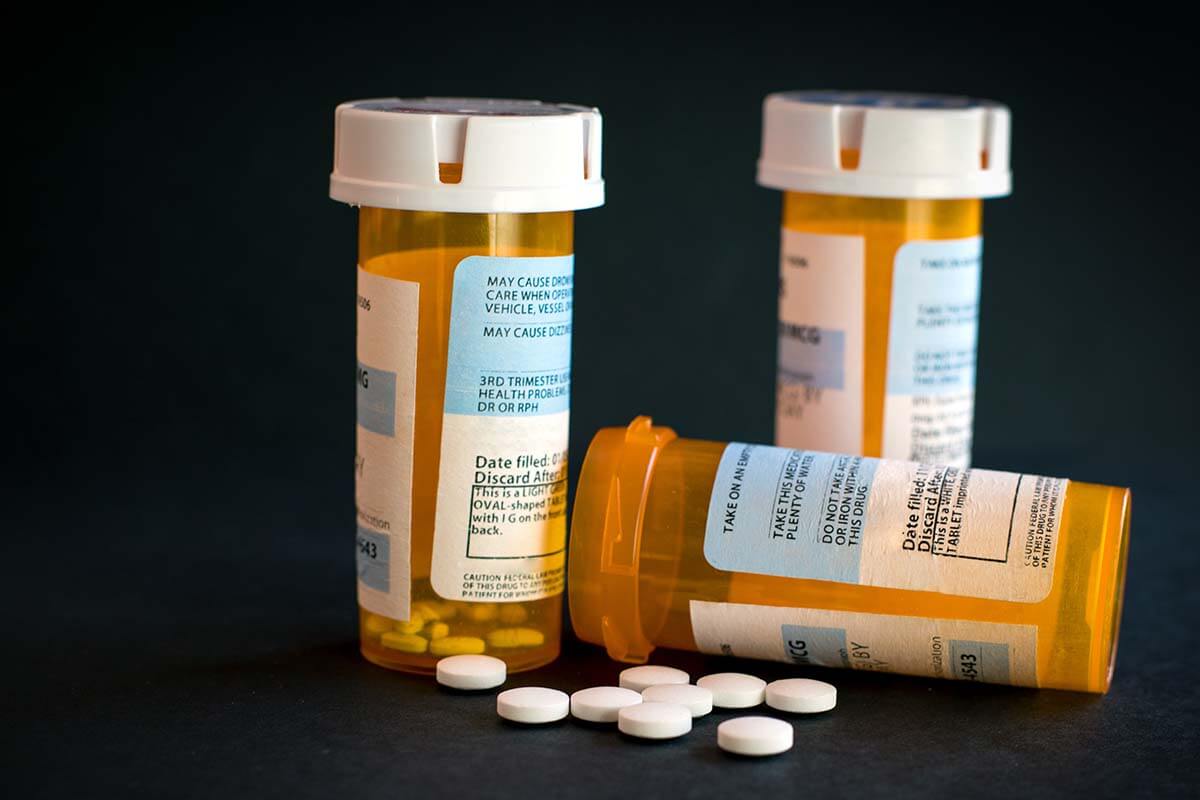
Web Button-400x150px-042713The 6th National Prescription Drug Take-Back Day is scheduled for Saturday, April 27, 2013 from 10:00am to 2:00pm.

The National Prescription Drug Take-Back Day aims to provide a safe, convenient, and responsible means of disposal, while also educating the general public about the potential for abuse of these medications.

We’ve blogged in the past about the importance of properly disposing of prescription drugs. (Read: Maine Tops States for Unwanted Prescription Drug Collection)

Why does it matter if you have a few old pills in your medicine cabinet? Because those leftover pills are highly susceptible to diversion, misuse and abuse. Rates of prescription drug abuse in the U.S. are alarmingly high, as are the number of accidental poisonings and overdoses due to these drugs.  In addition, studies show that a majority of abused prescription drugs are obtained from family and friends, including from the home medicine cabinet.

There’s also an environmental reason to bring your old prescription medications to a collection site. Flushing pills down the toilet or throwing them in the trash can cause both safety and health hazards.

Since the Drug Enforcement Agency (DEA) started the take-back initiative, more than 2 million pounds of prescription medications have been removed from circulation.

Find a collection site near you

Apr
15

Crossroads on Perspectives

Teresa Bendoka Heinfeld

Teresa Bendokas-Heinfeld, Crossroads System Administrator

Teresa Bendokas-Heinfeld, Crossroads’ system administrator, was recently a guest on the radio show Perspectives.

The local radio show is dedicated to featuring Maine-based non-profit organizations.

On the show, Teresa talks to host Sandra Gilly about Crossroads’ gender-responsive addiction treatment and its concentration on the ways in which men and women get better differently.

She talks about how Crossroads is continuously growing and meeting the needs of community.

She talks of how women building strong relationships with other women and their community helps them find recovery.

She talks about Crossroads programming and funding and how the agency was recently awarded a federal SAMHSA grant to enhance its Children And Mothers Program (CAMP).

She talks of the feeling of comfort and home clients get when they walk into a Crossroads treatment facility.

She talks of the follow up after treatment is complete and how Crossroads offers a continuum of care and can really treat a person across the lifespan.

Listen to Teresa on Perspectives:

As Teresa notes, if you are in need to Crossroads’ services the first step is to take a look at our website or give us a call at 207.773.9931.

We understand that first step can  be terribly difficult. We won’t force anyone into treatment. We’ll talk with you to help you figure things out.

Mar
26

Guest Post: How I Learned to Take Responsibility for my Parents’ Drinking

The following article is a guest post by Dawn Clancy.

I vividly remember sitting across from my stepfather, Joe, at the kitchen table. In his hands were a stack of multiplication flashcards about 2 inches thick. His impatient, beady eyes drilled right into the center of mine as he snapped each card in front of my face.

WHAT is 8×5?

…um…

I SAID WHAT is 8×5?

uh…30?

NO! We did this one already. THINK 8 – 5 times. WHAT is it? DON’T count on your hands.

I said nothing as tears scrambled down my red hot cheeks. I felt trapped and as much as I tried to force myself to come up with the right answer – I couldn’t. All I could hear in my panicked six year old brain was – You are so DUMB. This is all your fault. See what you did? You never get anything right. Stupid, stupid, stupid, stupid. I hate you, I HATE YOU!

girl-crying

Photo Credit: Kamira

Frustrated, Joe thrusted himself up from the table grabbed another beer from the fridge and stumbled into the living room. He mumbled something to my mother like – she’s your stupid kid – you go help her. The next thing I felt was my mother twisting a fistful of my hair around her pointer and middle finger. She yanked my head up off of my chest and put her lips right up against my ear. She was clenching her teeth tight but I could still smell the alcohol on her breath.

You little brat, you see what you did?

You wanna act dumb?

That’s right you keep it up and see what happens.

She released her grip, smacked me upside the back of my head and left the room. As the hours passed they got drunker and the verbal insults morphed into more physical assaults.

If there was one thing I learned that day it certainly had nothing to do with math or multiplication tables. As a child who grew up in an alcoholic, abusive home I became skilled at taking responsibility for my parents’ feelings, reactions and drinking. You see, I learned that if I was smarter, then my stepfather wouldn’t have exploded, my mother wouldn’t have had to pull my hair, I wouldn’t have made her upset, they wouldn’t have kept on drinking and the fighting would have never started.

fault-flow-chart

Photo Credit: Dawn Clancy

I couldn’t see the loopholes in this logic at the time but the lessons stuck and have shaped who I am today. As an adult I still struggle with feeling overly responsible for things that consciously I know I have no control over. As a result, I find it difficult to assert myself and set boundaries without feeling overwhelmingly guilty. I am still working on unlearning these messages, and believe me when you are ready to make changes in your life – you will be given plenty of opportunities to practice. It takes time and loads of patience to undo the damage that has been done, but you can and you will – take it from me.

Dawn Clancy is the creator of the blog, Growing up Chaotic, which provides support as well as valuable resources to the community of men and women who grew up in alcoholic, drug addicted, mentally, emotionally, and physically abusive families. She currently lives in NYC and is hell bent on breaking, cracking and demolishing the viscous cycle of dysfunction.

Mar
20

Social Work Month 2013: Weaving Threads of Resilience and Advocacy

social work month 2013March is Social Work Month.

This year’s theme is Weaving Threads of Resilience and Advocacy: The Power of Social Work” which emphasizes the value of using personal strengths and self-advocacy to manage serious life challenges.

In honor of social work month, we’re sharing a neat infographic that gives you information about what social work really is and where you find social workers in the community.

What would do without social workers?

”Social
Via MSW@USC: Online MSW

Mar
18

Family Involvement in Substance Abuse Treatment: A Client’s Perspective

momandteenCrossroads has put a stronger emphasis on family involvement at all levels of treatment over the past year or so. Following is an anonymous quote from a client in our halfway house program, also known as Back Cove, about what it meant for her mother to be involved in her treatment.

“It was really nice for my mom to have had the opportunity to participate in family education at Back Cove. It allowed her to get a better understanding of what recovery looks like for me now. She was able to see that I AM serious about staying clean and sober and to also get back in touch with myself.  She understands this is just the beginning, but sees that I am doing it thus far. It gave me the opportunity to be honest with her. She was able to hear me say what I want for myself. She and I both realized that outside of alcoholism and drug addiction, we have a lot in common.

She attended an Al Anon meeting and an AA meeting with me and came to realize that the 12 steps are not just applicable to drug and alcohol addiction. She was so interested in the 12 steps, she left the AA meeting with a 12 Step book. She was also able to witness me receiving my 30-day chip (Hooray for me!). She left the meeting feeling enlightened, relieved and armed with more education.

Thanks for the opportunity to build this relationship.”

Crossroads Back Cove holds family get togethers on Monday evenings from 5:30pm – 6:30pm. Family, sponsors and other supports are encouraged to attend an informal education. According to Halfway House Program Manager Nikki Oliver, “we talk about the program, a tad of education, resources available to families, and encourage participants to attend Al Anon. Visitors are encouraged to ask questions and have brief interactions with their person in treatment.”

For more information on our 6-month halfway house program for women, visit the Crossroads website.

This article was originally published in Crossroads’ monthly e-Newsletter

Mar
04

Background and Benefits to Dialectical Behavior Therapy (DBT)

Crossroads recently started a new Dialectical Behavior Therapy (DBT) Group at its Greater Portland Counseling Center office in Scarborough, Maine.

DBT is an evidenced-based approach that offers an array of cognitive behavioral strategies to help individuals learn to better manage their emotions, behaviors, relationships and life challenges while developing a stronger connection to the world they live in. Our DBT group focuses on developing skills such as mindfulness, distress tolerance, emotional regulation and interpersonal effectiveness.

According to Assistant Clinical Director Dr. Mary Anny Roy, Dialectical Behavior Therapy is effective in treating individuals who may have:

  • Various mood disorders
  • History of trauma
  • Challenges with chemical dependency
  • Problems with self-esteem, relationships, acceptance and regulating one’s emotions

DBT is a good option to consider if you are looking to improve the quality of your life and interpersonal skills.  

DBT is beneficial, as it helps people learn to:

  • Tolerate intense emotions and challenging situations skillfully
  • Take action in positive ways while also developing a greater ability to remain open-minded

By participating in a DBT group, one will develop the skill of learning to set and maintain healthy boundaries and develop greater self-respect.

More on our DBT group for women:

Dialectical Behavior Therapy (DBT) Group
When: Thursdays, 11:00am – 12:30pm
Who: Women
Counselor: Beata A. Wiktor, LCPC, Psy.D.
Where | FMI:
Greater Portland Counseling Center
71 US Route 1, Suite E, Scarborough, Maine
207.773.9931 or email
Directions to Greater Portland Counseling Center

Feb
21

A Crossroads alumnae visit, from a client’s perspective

Last week, we shared the story of a former client’s visit back to 525 Forest Avenue, the home of Crossroads’ halfway house program. This week, we’re sharing the impact Ashley’s visit had on one particular client. The following post was written by halfway house client Melissa W.

Crossroads Back Cove

The front door of Crossroads Back Cove in Portland, Maine.

As a client of Crossroads, I often wonder how many clients continue on their journey for a better life. Since being in the Back Cove program, we have had the opportunity to hear from several past clients. Each of these women has volunteered their time to share their stories of experience, strength and hope. They have assured us that we too can remain clean and sober if we continue to work our program.

Although many of these women have given us the courage to move forward and the belief that all things are possible, there has been one particular woman that really has made an impact on us as a group.

Ashley is a former client. She was seeking direction and guidance from those who could show her a new way of life. Her story includes having no support from her immediate family. She had only herself and Crossroads staff and clients. She told us she made the decision for continued treatment on her own because she couldn’t continue living her life the way she was. This reason alone makes her one of the bravest women I have ever had the pleasure of coming in contact with.

Ashley talks about her life at Back Cove as anything but simple but shares how rewarding it was in many areas of her life. After all, living with eleven other people can be difficult and frustrating, especially for anyone not used to being in relationships with others, much less themselves. Regardless of the obstacles she encountered, she is recovering from the disease of addiction.

Ashley is now living in housing with other women in recovery. She goes to school to pursue her passion in cosmetology. She is able to hold down a position at a local retail store and enjoys her job. Ashley has a sponsor, has worked the steps, and soon will be able to sponsor other women in the program. On her days off, she volunteers her time to women who are dealing with addiction in hopes that she is able to make a difference to someone in need.

One day, a few weeks ago, Ashley was able to come into Back Cove and cut the hair of any female in the house that wanted a haircut. While here, Ashley spoke to each of us as if she had known us forever. She complimented the program nicely and showed much gratitude to all that she had learned while she was here. Ashley said something to me that day that I hope to never forget. She told me, “never turn down a chance to have a relationship with another female.” She explained to me that many people will come and go but not trusting the next women that enters your life could cause you to miss out on an opportunity to meet someone really terrific. I needed to hear that, and it was refreshing to hear because I could tell she believed everything she was saying.

By the end of her visit, we all agreed that she is very good at what she does and were all happy with her work as well as her generosity.

Ashley reminded me that being sober and staying clean has many rewards; they are simply the “gifts of sobriety.”

Ashley is human, she knows things happen, but how we react to them is what is important. Ashley has a full understanding of what it takes to maintain her sobriety, and she has worked hard to achieve this goal in her life.

Her presence and sincerity is extraordinary. She is genuine in her intentions of helping others in addiction. The knowledge that she holds is amazing and her willingness to share her experience, strength and hope is profound. I have no doubt in my mind that she will continue on her own personal journey to better her life on a daily basis.

Ashley is a powerful example for many and proof that this program works… if you work at it.

Feb
12

Going Back to 575 Forest Avenue

Crossroads halfway house

Crossroads Halfway House

The following post was written by a former Crossroads halfway house client, Ashley N. Next week, we will share a story from a client who wrote about Ashley’s visit.

Thank God for 575 Forest Avenue. I will never be the same, because the work I was able to do in six months changed me forever. I am blessed to have met the friends I have from Crossroads; they have been by my side ever since.

I learned how to live again and about addiction. I built relationships with women, and I was taught tools to use to help get through tough struggles in sobriety. I rebuilt a new life for myself. 

Today when I share my story, Crossroads is a part of it and I’m happy to share it because I’m forever grateful for that time in my recovery. For me, when women told me they went through this program, I was enticed to hear what they had to say. What could they say that would help me? If these women did it than so can I! There is courage and hope from these associations.

Going back to the halfway house since my discharge date has been nothing but amazing. I love meeting the new girls there and being able to share my experience with them to hopefully help them get through theirs. It brings me back to all the memories I had while living at Crossroads. Ups and downs, the trials that helped me learn the most. Rules change, the clients change but all the stories and their emotions stay the same and that is what I can relate to. I walk out of there with a glow on my face, because I know in my heart if they continue to take suggestions and keep doing the right things what happened to me can happen to them and it’s a beautiful thing.

I wish to never forget the overwhelming feelings I had when I first went into recovery. Going back to the halfway house to meet these new girls helps me so much to remember what it was like, how it’s changed, and what it is like now. I can give them what I have been given. I can honestly say if it wasn’t for that house and the rules, the groups, the clinicians and the support, love, and relationships I would not be sober today!

It is so important to me to continue to give back and to see where I was at the start and how my life has turned around for the better.

Jan
15

One teacher. One student. One day at a time.

Photo Source: Dreamstime

Photo Source: Dreamstime

The following post was written by a Crossroads halfway house client, Missy W.

Recently, I had a unique opportunity to attend a conference at Sanford Community Adult Education. Accompanying me to this meeting was the program manager of Crossroads Back Cove, Nikki Oliver, and a client from Milestone Foundation.

We were there to share our stories of experience, strength and hope with the educators of the community. Our main objective was to provide insight and answers to questions the teachers may have about addiction warning signs and what they could do to help.

At the beginning of the meeting, we all introduced ourselves. Nikki began by speaking about her background as a Licensed Alcohol and Drug Counselor (LADC). Nikki answered questions asked by the teachers, who inquired about everything from Ala-teen (when and where these meetings are held and if they are still available to teenagers) to what they can do to improve their relationships with students who are currently dealing with substance abuse issues.

The teachers appeared interested in knowing that addiction seems to stop a person from maturing. If a person’s addiction starts in their teens to early 20′s, by the time they are in their 40′s, having abused drugs and alcohol for some many years, they still have the mental thought process of the person they were twenty years before.

There are typically three major barriers that increase the risk of substance abuse. Trauma, cognitive mental health issues (poly-substance abuse) and genetics can all play a part in the beginning stages of substance abuse and can often be very difficult to overcome for anyone.

The client from Milestone provided a lot of guidance to the teachers when he said that it would be helpful to recognize that if a student is using substances and the teacher is aware of it; The teacher should address the student one on one and offer his or her help. He also stated that it is important to realize and understand that when the student is “ready,” then they will seek the help they need. He told his courageous experience to the teachers to help enlighten them on his personal signs and struggles that he encountered in school. Not only was he very encouraging, but he was insightful.

I also shared my experience with the teachers. This was helpful for me, and I hope it was as helpful to them as well. I was able to let them in on my trauma as a child, which I believe began my journey into drug addiction. It also played a large part of several addictions in my life. I had an eating disorder and struggled with many learning curves. I shared with the teachers that I believe that one on one interaction is crucial to students for many reasons, but mostly because it lets the student know that they are there for them and the door is always open.

The day went exceptionally well. We were all praised and thanked for our participation. The teachers were very receptive to the information we provided on our personal experiences. Nikki was not only thorough, but also informative and knowledge on these subjects. I know for me personally, this was truly a gift and a great opportunity to help teachers help students. I hope that what we all shared can make a difference somewhere for someone. This was truly a privilege that has the potential to benefit many… One teacher, One student, One day… at a time.

Related Posts Plugin for WordPress, Blogger...

Older posts «